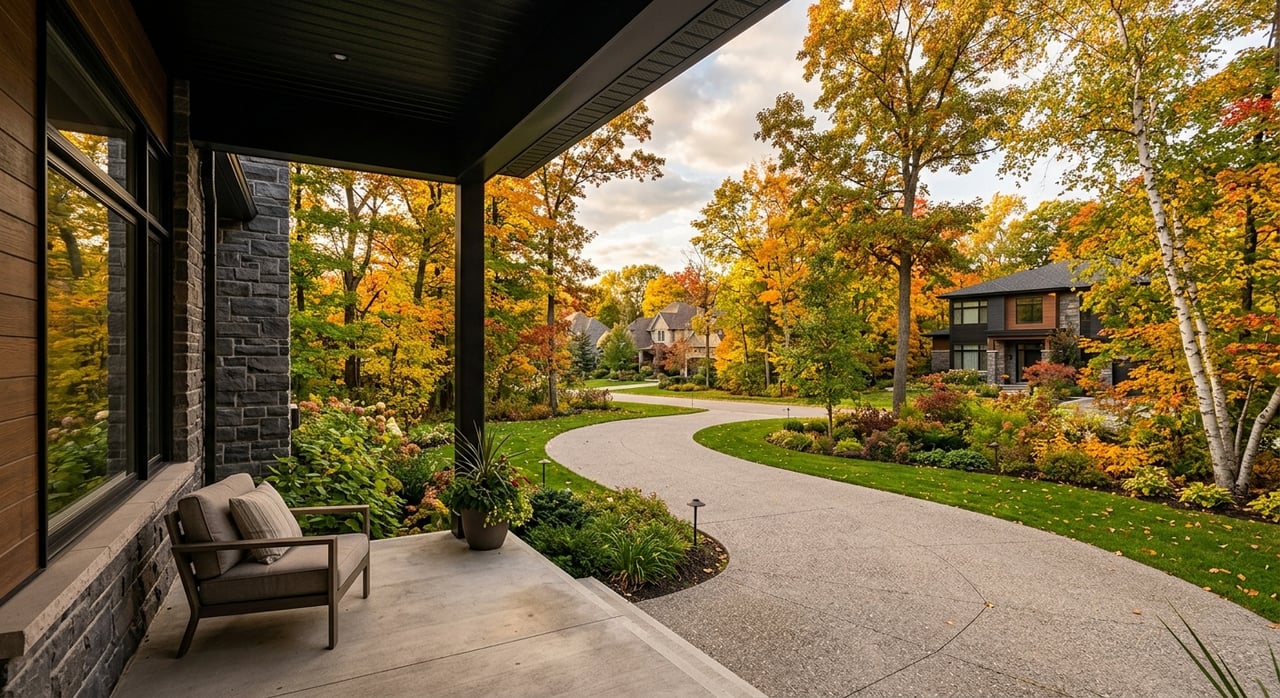
Relocating to Dublin Ohio: Practical Guide for Buyers
May 21, 2026
May 21, 2026
Thinking about moving to Dublin, Ohio? If you are trying to balance commute times, home prices, neighborhood feel, and day-to-day convenience, Dublin deserves a close look. This guide will help you understand how the city is laid out, what different parts of the market feel like, and what to watch for before you buy. Let’s dive in.
Dublin is one of the larger suburbs in the Columbus area, with an estimated 49,456 residents in 2024. It combines a strong residential base with a major employment presence, which gives it a different feel than a suburb that is mostly designed for commuters. The city also reports more than 20 corporate headquarters as part of its local identity.
For many buyers, that mix matters. You are not just choosing a place to sleep at night. You are choosing a city with roughly 3,000 businesses, a daytime population that can reach about 65,000, and a footprint of just over 24.5 square miles.
Dublin also stands out for household income and homeownership. According to the U.S. Census Bureau, the median household income is $160,296, and the owner-occupied housing rate is 77.1%. That points to a market where many residents are long-term homeowners rather than short-term renters.
Dublin offers a mix of suburban convenience and evolving mixed-use development. The city’s planning documents show that future growth is centered on greenways, mixed-use categories, and a multimodal thoroughfare system. In practical terms, that means some parts of Dublin will continue to become more connected and more walkable over time.
This is helpful if you are relocating and trying to match your lifestyle to the right area. Some buyers want a more traditional suburban setup with a larger residential footprint. Others want easier access to shops, restaurants, offices, and public spaces in a denser environment.
The average commute time reported by the Census Bureau is 23.2 minutes. That can be appealing if you need access to the broader Columbus region but still want a suburb with its own employment and activity centers.
Dublin’s location at the junction of Interstate 270 and U.S. 33 is one of its biggest practical strengths. City planning materials point to regional accessibility as a major growth driver for decades. If you expect to drive to work, the airport, or other suburbs around Columbus, this road access is a real benefit.
For relocating buyers, this often makes Dublin easier to compare favorably with other suburban options. You can reach many parts of Central Ohio without feeling cut off from the region.
If you use transit, COTA serves a broad area with 39 fixed-route bus lines, one seasonal route, and more than 3,000 transit stops across its service area. For Dublin specifically, Line 73 operates as a rush-hour route and includes the Dublin Dale Dr Park and Ride, Griggs Dam Park and Ride, and downtown Columbus among its destinations.
Within Dublin, there are also local mobility options worth knowing. The city operates the Dublin Connector, which offers fare-free rides for people who work in Dublin to and from work, as well as fare-free service for Dublin residents age 55 or older and residents with disabilities. Dublin also partners with Veo for scooters, e-bikes, and pedal bikes with 24/7 service.
Not every part of Dublin offers the same day-to-day experience. The city identifies Historic Dublin and Bridge Park as special walkable, mixed-use districts with active curb and parking management. If you want to be able to do more on foot, those areas may feel very different from more auto-oriented residential sections of the city.
That difference is important when you start touring homes. Two Dublin addresses can offer very different lifestyles even if they are only a short drive apart.
If schools are part of your planning, one of the most important things to know is that Dublin City Schools boundaries are not the same as city boundaries. The district provides an address lookup tool for the 2025-2026 school year, and that is the best way to confirm assignment for any specific home.
The district includes a preschool, 15 elementary schools, 5 middle schools, 3 high schools, and a specialty secondary campus. The three high schools are Coffman, Jerome, and Scioto. If you are relocating, that gives you a sense of the district’s overall structure, but not enough to rely on neighborhood name alone.
Transportation is also based on distance rather than city limits. Elementary and middle school students are eligible for bus service when they live more than 0.5 mile from school, and high school students are eligible when they live more than 1 mile away. That is another reason exact address review matters before you make an offer.
Historic Dublin is the city’s historic core and one of its most walkable areas. The city describes residences along Riverview and Franklin streets, with retail, civic, and residential uses intermingled along High and Bridge streets. This area can appeal to buyers who want a more established setting with a mixed-use environment.
Because Historic Dublin is governed by specific historic design guidelines, the ownership experience can differ from other parts of the city. If you are drawn to homes with more character and a more traditional street pattern, this is an area to watch closely.
Bridge Park is Dublin’s newer urban mixed-use district within the Bridge Street District. Official project filings describe a concentration of condominium, office, parking, and open-space development in this area. It is widely recognized as one of the city’s densest and most walkable housing environments.
If you want a more urban-style lifestyle without leaving the suburbs, Bridge Park may fit that goal. It offers a different housing and mobility experience than the more traditional single-family neighborhoods that many buyers first picture when they think of Dublin.
Muirfield Village is an established master-planned golf community that began development in the 1970s. The city identifies it as the largest residential development in Dublin. For many relocating buyers, Muirfield is one of the best-known names in the local market.
It also sits at a higher price tier. Zillow reported an average home value of $693,688 in Muirfield Village in March 2026, which places it above broader citywide averages.
Ballantrae is another golf-oriented community in Dublin. The city notes an 18-hole links golf course at the heart of the neighborhood, along with a city park and spray fountain amenity connected to the area. Buyers who want a neighborhood organized around that type of amenity structure may want Ballantrae on their list.
As with any relocation move, it helps to compare not just home style and square footage, but also how the neighborhood functions day to day. Amenity structure, road access, and nearby activity centers can affect your lifestyle just as much as the house itself.
Dublin is firmly a mid- to upper-six-figure market. Zillow’s April 2026 city-level home value estimate was $566,623, while Redfin reported a March 2026 median sale price of $636,250 and described the market as very competitive. That gives you a useful current snapshot if you are trying to set expectations before touring.
It is also important to know that Dublin is not one single price band. Redfin’s March 2026 data showed a median sale price of about $415,000 in ZIP code 43016 and about $610,000 in 43017. That spread shows why broad city averages only tell part of the story.
The city’s housing study adds longer-term context by showing how home age can influence pricing. In 2017 through 2021 sales, the median sale price was $390,000 for homes built before 1970, $443,250 for 1990s homes, $550,000 for homes built in the 2000s, and $649,200 for homes built after 2010. While that study is historical rather than current pricing, it helps explain why newer homes often command a premium.
If you are relocating to Dublin, a simple starting point is to think in tiers. Older or smaller homes can still show up in the low- to mid-$400,000s. Many move-up and family homes cluster around the $600,000 range, while golf communities and custom-home pockets can push much higher.
That range makes planning easier. Instead of asking, "What does Dublin cost?" a better question is, "What type of Dublin home and lifestyle fits my budget?"
Here is a practical way to frame your search:
Relocating buyers usually benefit from narrowing the search in the right order. Start with your commute and lifestyle preferences first. Then compare neighborhood format, school assignment by exact address, and realistic pricing within each submarket.
This process matters because Dublin has overlapping micro-markets. A walkable condo-style setting in Bridge Park, a home in Historic Dublin, and a larger property in an established golf community can all fall under the same city name while offering very different ownership experiences.
A curated buying strategy can save you time and help you avoid false comparisons. When you know which trade-offs matter most to you, you can focus on homes that truly fit instead of trying to force one part of Dublin to act like another.
If you are planning a move to Dublin and want a more tailored view of neighborhoods, pricing, and the right fit for your goals, Nick Vlasidis can help you navigate the market with a local, concierge-level approach.


We pride ourselves in providing personalized solutions that bring our clients closer to their dream properties and enhance their long-term wealth. Contact us today to find out how we can be of assistance to you!