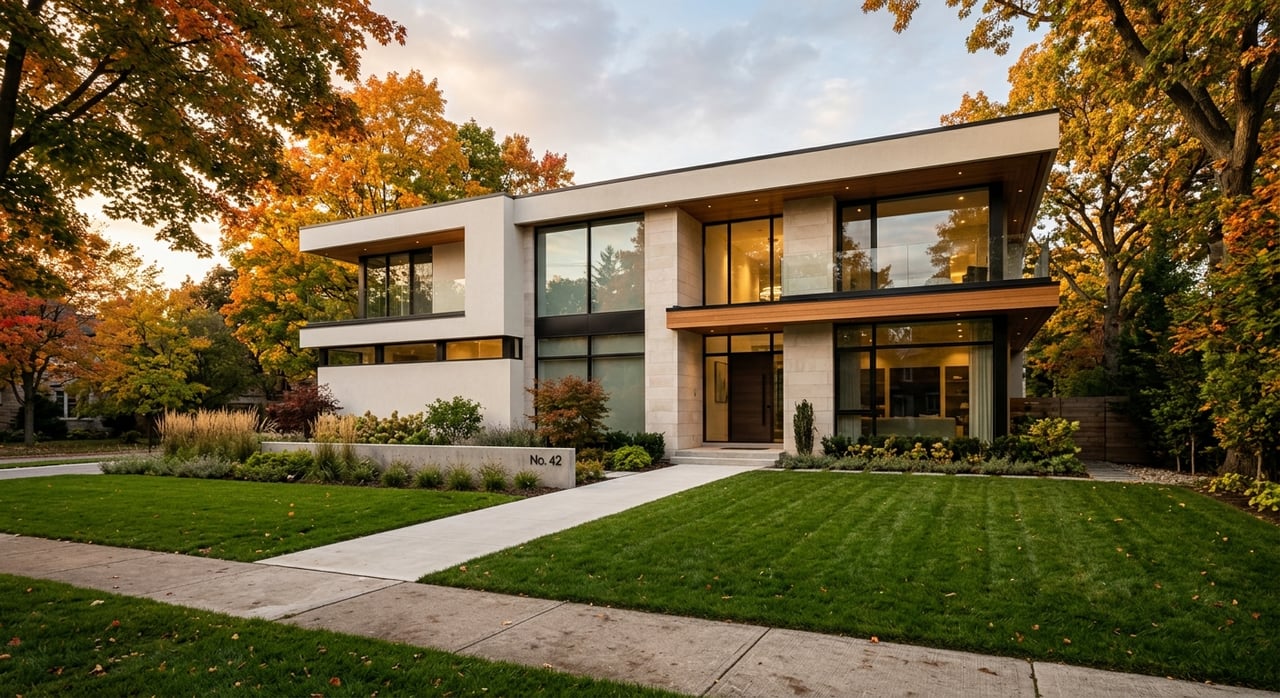
New Albany Country Club vs Village Center: How to Decide
May 28, 2026
May 28, 2026
Trying to choose between New Albany Country Club and Village Center? You are not alone. Both areas offer a distinct New Albany lifestyle, but they serve very different day-to-day priorities. If you are weighing privacy, walkability, architecture, amenities, and price, this guide will help you compare them clearly so you can move forward with confidence. Let’s dive in.
The biggest difference between these two areas is how they feel when you live there. New Albany Country Club leans private, formal, and estate-oriented, while Village Center feels more connected, walkable, and woven into the city’s civic core.
If you picture larger homes, more space around you, and a neighborhood shaped by club living and architectural continuity, the Country Club will likely feel more aligned. If you want to be closer to Market Square, civic destinations, and a more pedestrian-friendly setting, Village Center usually stands out.
New Albany Country Club is centered on a private club experience. Official club materials highlight golf, dining, fitness, aquatics, racquet sports, and a Georgian clubhouse, and membership is not limited to residents of the surrounding community.
The residential setting around the club is known for stately Georgian architecture, green space, trails, and a 27-hole Jack Nicklaus golf course. The HOA also notes that the broader community includes 30 sections and more than 1,500 parcels, with design standards that create a more formal and consistent visual character.
Daily life here tends to feel more residential and insulated. The HOA maintains 35 common-area acres and more than 13 miles of leisure trails, along with shared features like benches, bridges, gazebos, gates, fences, and tree canopy.
That creates an experience that is more about neighborhood setting and private amenities than walking to a mix of shops, offices, and civic buildings. For many buyers, that is exactly the appeal.
Village Center is New Albany’s city-planned core. The city describes it as a connected, pedestrian-friendly hub built around Market Square, Rose Run, the library, the post office, civic buildings, and a traditional grid pattern.
This area is shaped by planning that supports a traditional town-center form. The city’s framework emphasizes compact blocks, parking behind buildings, pedestrian connections, and a district that blends residential, office, retail, and civic uses.
Village Center tends to suit buyers who want convenience built into their routine. The city points to Market Square as the center of activity, with destinations like the library, McCoy Center for the Performing Arts, the Philip Heit Center for Healthy New Albany, amphitheater space, parks, and nearby civic services.
If your ideal day includes walking to more destinations rather than driving to them, Village Center generally offers the stronger fit. The planning here was intentionally built around that kind of access.
Both areas reflect New Albany’s broader design identity, but they do it in different ways.
In the Country Club area, the architectural theme is consistently Georgian. The HOA says each section has its own character, but the common thread is a unified Georgian design supported by architectural review and community rules.
That structure helps explain why the neighborhood feels polished and visually consistent. It also means buyers should expect a more governed design environment than in many other neighborhoods.
Current listing examples show the scale many buyers associate with the area. Active homes in the research snapshot ranged up to about 6,098 square feet and up to roughly 1.03 acres, with asking prices around $995,000 to $2.8 million.
Village Center follows a different pattern. The city’s plan calls for compact blocks, smaller lots, strong pedestrian connections, and in some street types, setbacks as shallow as 5 to 8 feet.
That planning creates a more urban, town-center feel. Housing here is also more varied, with the city explicitly framing the district as a place for mixed use and diverse housing rather than only detached single-family homes.
A current example is Market & Main at 195 W. Main Street, which combines exterior Georgian architecture with more contemporary interiors. That mix captures the Village Center feel well: traditional on the outside, often newer and more low-maintenance on the inside.
This is often the deciding factor.
If privacy and space matter most, the Country Club usually has the edge. Larger lots, estate-style positioning, and a more neighborhood-centered environment support a quieter, more tucked-away feel.
It is also more HOA-governed, which can appeal to buyers who value continuity and a carefully maintained setting. That governance helps preserve the neighborhood’s overall appearance and structure.
If you want a more walkable routine, Village Center is the stronger option. The city’s planning materials clearly prioritize connected blocks, pedestrian access, sidewalks, and proximity to civic anchors.
That does not mean every errand is right outside your door, but it does mean the district was intentionally designed for movement on foot. For buyers who want a lower-maintenance lifestyle near public gathering spaces and daily conveniences, that matters.
Amenities look very different in these two areas, and your choice should reflect how you actually live.
The Country Club community is the clear winner if you want private-club amenities to be part of your lifestyle. Club offerings include golf, dining, fitness, aquatics, and racquet sports.
That package can be especially appealing if you want recreation, dining, and social opportunities tied to one central private setting. It is worth noting again that residency is not required for membership, which gives some flexibility to buyers thinking about the broader New Albany area.
Village Center wins on civic access and daily convenience. The concentration of Market Square destinations, parks, cultural venues, health-focused facilities, and public services makes this area feel more connected to the city’s shared spaces.
If your version of convenience is being near community destinations and having stronger pedestrian access, Village Center checks more of those boxes.
Price can narrow your decision quickly, especially if you are comparing detached homes to attached or lower-maintenance options.
Across New Albany overall, Realtor.com’s May 2026 snapshot showed a median listing price of $589,450, a median sold price of $677,500, and a median 28 days on market. The same snapshot labeled New Albany a seller’s market.
The Country Club sits well above the citywide median. Realtor.com’s neighborhood snapshot showed a median listing price of about $1.697 million, with 16 homes for sale at the time of the report.
That pricing lines up with what most buyers expect here: larger homes, larger lots, and a more estate-style environment. If you are shopping in this area, you should be prepared for a luxury price point.
Village Center is harder to summarize with one clean median because it is a mixed-use district with different housing types. In practical terms, the entry point is often lower than the Country Club, especially for attached or lower-maintenance housing.
The research snapshot noted Market & Main rental listings around $1,569 to $3,397 per month depending on unit size. It also referenced current New Albany condo inventory in the high $200,000s to low $400,000s, which helps illustrate a more accessible entry point compared with Country Club pricing.
If you are still torn, focus on how you want your week to feel, not just how the home looks online.
Choose New Albany Country Club if you are looking for:
Choose Village Center if you are looking for:
Neither option is universally better. The right choice depends on whether you value privacy and club-centered living more, or walkability and town-center convenience more.
In New Albany, that distinction is unusually clear. Country Club offers a more private, estate-oriented experience with formal design standards and premium amenities, while Village Center offers a more connected, pedestrian-friendly lifestyle centered around Market Square and civic life.
If you want help comparing current opportunities in either area, working through pricing, or narrowing down the best fit for your goals, Nick Vlasidis can guide you with a private, tailored approach.
We pride ourselves in providing personalized solutions that bring our clients closer to their dream properties and enhance their long-term wealth. Contact us today to find out how we can be of assistance to you!